

Discover how we're driving the Nation's scientific progress through world-class research across Earth and Space sciences at Goddard’s Sciences and Exploration Directorate.
Earth Sciences
The Earth Sciences Division is the nation's technical innovator and essential data provider to support national infrastructure, scientific leadership, and economic resilience.
Go to Division
Astrophysics
The Astrophysics Science Division leads America's quest to answer our most profound scientific questions, developing technologies with transformative applications in medicine, national security, and intelligence.
Go to Division
Heliophysics
The Heliophysics Science Division advances understanding of the Sun and its interactions with Earth and the solar system, providing the foundational science that drives space weather research and solutions in collaboration with government, industry, and academia.
Go to Division
Planetary Sciences
The Solar System Exploration Division powers space missions and leads human space exploration to the Moon and Mars through revolutionary research that charts the frontiers of our solar system and deepens our understanding of planetary system formation and evolution.
Go to Division

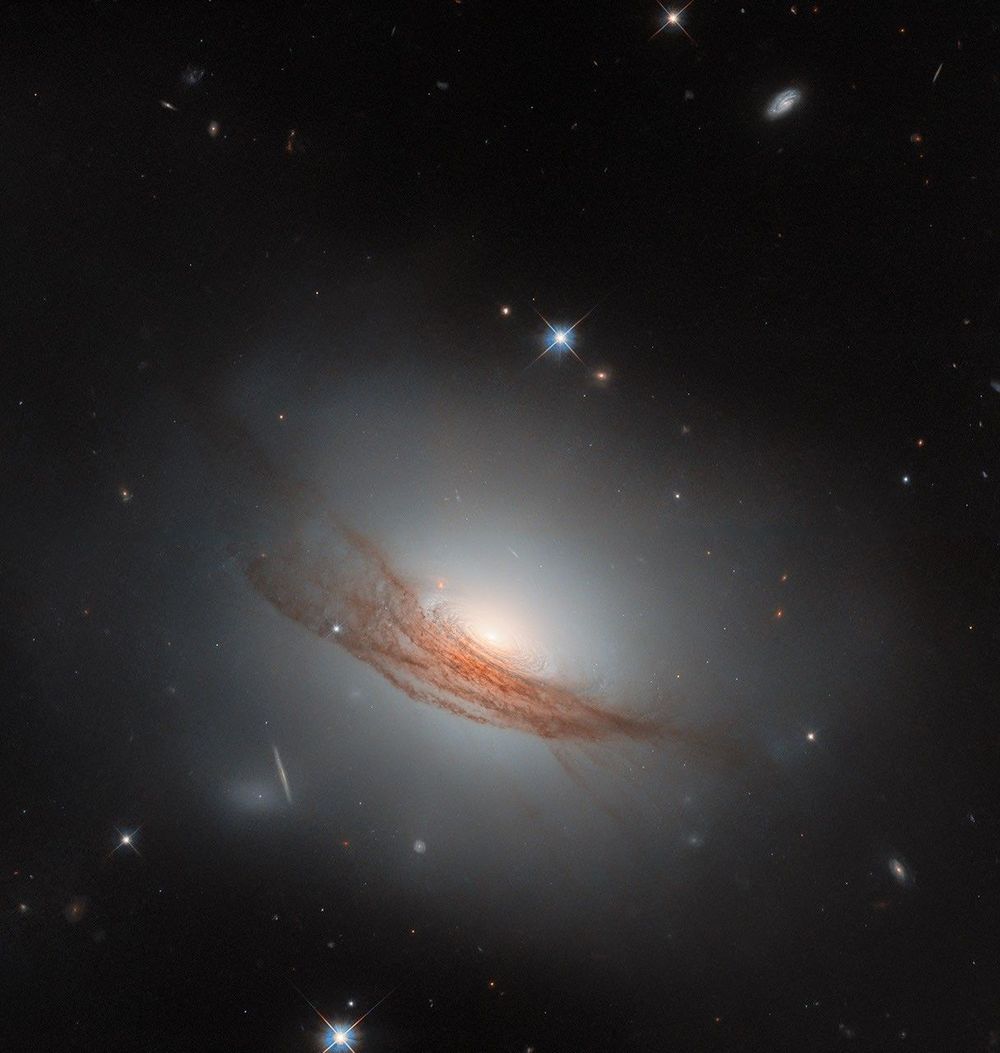

Spiral Galaxy NGC 1512: Wide Field
Most galaxies don't have any rings -- why does this galaxy have three? To begin, a ring that's near NGC 1512's center -- and so hard to see here -- is the nuclear ring which glows brightly with recently formed stars. Next out is a ring of stars and dust appearing both red and blue, called, counter-intuitively, the inner ring. This inner ring connects ends of a diffuse central bar of stars that runs horizontally across the galaxy. Farthest out in this wide field image is a ragged structure that might be considered an outer ring. This outer ring appears spiral-like and is dotted with clusters of bright blue stars. All these ring structures are thought to be affected by NGC 1512's own gravitational asymmetries in a drawn-out process called secular evolution. The featured image was captured last month from a telescope at Deep Sky Chile in Chile.